Painting is one of those home remodeling jobs that doesn’t actually require too much in the way of specialist training or expertise. If you can pick up a paint brush or roller and then apply paint to the wall/floor/ceiling/etc. in a relatively even and patient manner, you can paint your home. That’s not to say that it’s an easy job, though.
If you’re considering DIY painting your home, here are 10 tips that might just help make the job a little easier for you:
Tip #1: Get tester pots of paint and get testing!
You are going to want to make sure that you've made a definite, final decision before you even begin to think about picking up a paintbrush. The last thing you are going to want to do is paint your entire room, realize you don't like the color, and then have to repaint the entire room a brand new one.
Test the paint on the walls. Try it next to doors, windows and curtains. Make sure that you definitely know what color you want before you order or buy the paint; otherwise, it’ll be a rather costly mistake.
Tip #2: Buy plenty of dust sheets/covers.
Unless you are removing the furniture, furnishings and personal belongings from your home or room (which is our recommendation), you’re going to want to cover them with dust sheets. If you have old bed sheets, you can always use those.
It doesn't matter how careful you try to be with your painting efforts, it will splatter and splash — and it will end up covering things that you don't want to get paint on.
Tip #3: Make sure you've purchased all necessary equipment.
Do you have plenty of tape? Is there a step-ladder close by? What about primer, or filler, or sandpaper? You’ll need goggles and other safety equipment, such as masks, alongside paintbrushes, rollers, paint trays, and the paint itself.
You'll want to make a list and then buy everything you need before you get started. It is very frustrating to get partway through a painting job before realizing that you don't have a vital item or piece of equipment.
Tip #4: Sand, fill, seal.
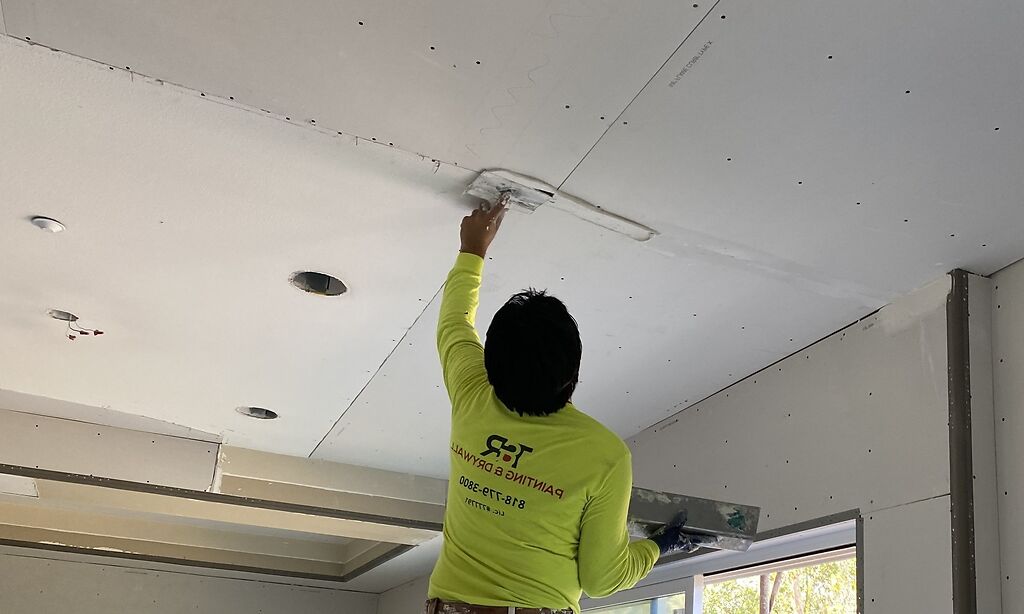
You will want to use sandpaper or similar to make sure that the wall is smooth and flat before you begin painting. This will help you to get a nice even finish, with no lumps and bumps. Holes should be filled or sealed, and it will help to give the walls a good clean to get rid of grime, grease, or other substances that will stop you from getting an even finish.
You will need to use a sander or sandpaper to get rid of old gloss or satin paint.
Tip #5: Cover everything.
Use dust sheets on furniture and the floor. Use masking tape to cover things such as skirting boards, door handles, light switches, plug sockets, etc. If you don’t want something to get covered in paint, splattered with paint, or otherwise damaged by paint/tape/cleaner, remove it from the room.
Tip #6: Use a primer.
A primer coat will help the paint to glide on and dry in a smooth and neat way. You should definitely consider using a primer paint coat first if you’re painting a lighter color over a darker color.
Tip #7: Paint, then wait.
Apply your first coat of paint. Make sure that you apply it thinly, evenly, and in a timely fashion. Once you have finished, wait for it to dry. Have some lunch, make a cup of tea, work in another room for a while. The paint must be completely dry before you proceed with a second or subsequent coats.
Tip #8: Apply two coats, minimum.
Most paint manufacturers will tell you that two coats will be enough to offer a smooth and even finish, but it can sometimes be beneficial to opt for a third. Wait for the first two coats to finish, then check it in the day and night, under both natural and artificial light, to check for uneven patches. From there, you can choose whether or not the job requires a third or following coats of paint.
Tip #9: Don’t “finish" the job at the end of the first day.
You might have successfully applied two coats of paint and allowed them to dry in one day, but we don't recommend putting away and cleaning all of your equipment just yet. Wait until the morning after, when the paint has been left to dry all night, and then check things over. You may find that there are areas that require an extra little lick of paint, areas you missed, or areas that look uneven for other reasons.
Tip 10: Keep a note of the color and type of paint.
When you're finished, try to keep some of the pain in a safe space. If you can't do that, take a photo or make a note of the exact color or code, as well as style or type of paint that you have used. This is to ensure that you can find an exact match later on, should you need to make repairs or restorations for any reason.